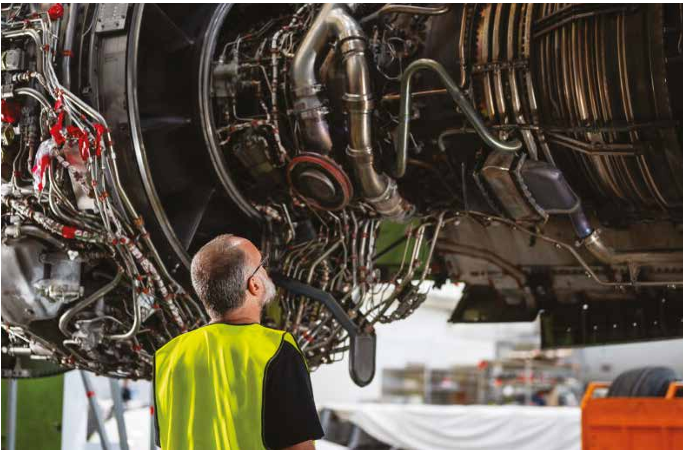
THE HUMAN FACTORS SAFETY MANAGEMENT SYSTEM AND THE HUMAN FACTOR
This paper examines the relationship between safety management and the human factor in aviation, emphasizing how both have evolved together throughout aviation history. The understanding of safety has progressed through four main stages: the Technical Era of the 1960s, which focused on technological improvements; the Human Factors Era of the 1970s and 1980s, which centered on reducing human error through training and awareness; the Organizational Era of the 1990s, which recognized that errors often result from multiple organizational causes rather than individual mistakes; and the Total System Era from the 2000s onward, which adopts a data-driven, integrated approach to managing safety across all system components. The study underlines that true safety can only be achieved through a holistic approach, where machine, method, material, environment, and human factors work in coordination.
I
n order to understand the relationship between safety management and the human factor in flight operations and the importance of this relationship it will be useful to briefly review the chronological evolution of the concept of safety in aviation. Throughout aviation history, the concept of safety and, accordingly, the approach and culture of safety have evolved and developed over time. In each phase it has passed through to reach its present state, the concept of safety has been strengthened and has become more effective in the sector. As the understanding of safety has strengthened, the sense of confidence it generated led to an increase in flight operations, investments, and interest, thereby making this development sustainable.
In the remaining part of this paper, we will examine together the global evolution and transformation of the concept of safety in the aviation industry, and then discuss its relationship with the human factor both during this transformation and at the present stage.
CHRONOLOGICAL DEVELOPMENT OF THE CONCEPT OF SAFETY IN THE WORLD
The Technical Era
The period of awareness in aviation history in terms of safety management is known as the Technical Era, which dates back to the 1960s. During this period, the most important factor for ensuring safety was considered to be technical regulations and improvements. It was believed that technical enhancements made to the aircraft the vehicle that humans use to fly would contribute to safety. Thanks to these efforts, we now fly fifth-generation jet aircraft, and the developed technology has been designed in a way that largely prevents human error. The technological advancements achieved during the technical era made a highly significant contribution toward enhancing safety.
The Human Factors Era
The Human Factors Era refers to the period that followed the technical improvements and focused on the human element. This period covers the 1970s and extends to the mid-1980s. The main objective was to create an interface between the human and the aircraft and to reduce human-induced errors. Other factors affecting safety were somewhat overlooked, and the primary focus was placed on the human element. The human factors era is characterized as a period in which significant progress was made in elevating human awareness of safety issues.
The Organizational Era
The Organizational Era is significant as it represents the transition of the safety management system from a single-factor to a multi-factor perspective. Up until the beginning of the 1990s, the prevailing view generally sought the cause of an error in a single domain. From this point onward, it became understood that errors often have multiple sources. Accordingly, the concept of organizational error was introduced into the safety agenda, and proactive/reactive approaches began to be applied. One of the most important error management models in aviation history the Swiss Cheese Model was proposed by the renowned psychologist James Reason during this era.
The Total System Era
From the early 2000s onward, the understanding of safety was carried to a completely different dimension. The Total System approach, which we are now well acquainted with, became central and found wide practical application. This approach based on interaction among different interfaces, data collection and analysis, root-cause analysis, and data-driven decision-making has become the main axis of safety management.
THE HUMAN FACTOR IN THE DEVELOPMENT OF THE SAFETY MANAGEMENT SYSTEM
Let us now examine how the human factor has played a role in the transformation and evolution of safety management summarized above.
In the Technical Era, human involvement was, of course, inherent in the process. However, as the focus was primarily on technical improvements and developments, technical personnel (technicians, engineers, and the like) played the most active roles.
During the Human Factors Era, as the name suggests, the focus of safety was on the human being. Attention was directed particularly toward those working in units that have a direct impact on flight safety. Significant progress was made in the training and development of individuals working in these departments. Mandatory training programs were introduced for employees in certain operational units. In addition to technical training, non-technical skills were identified and corresponding training programs were implemented. Through such efforts, significant momentum was gained in minimizing human error.
In the Organizational Era, as mentioned earlier, it became recognized that every part of the organization could have an impact on safety. Acting upon this principle, all departments and personnel within the organization were included in safety management, and efforts were made to create a shared culture. The goal was to develop individuals within the organization who perceive and interpret safety in the same way essentially, to establish an effective safety culture through a shared mindset.
Finally, in the Total System Era, efforts have focused on developing systems that are integrated with one another, exchange data, evaluate multiple possibilities, and help humans make data-based decisions. The aim has been to guide humans who are inherently inclined to make intuitive decisions toward rational decision-making within a systemic framework. To achieve this, emphasis has been placed on analyzing data from different systems, transforming it into meaningful information, and facilitating human decision-making.
WHAT IS A HOLISTIC (TOTAL SYSTEM) APPROACH AND WHY IS IT NECESSARY?
Human beings have, for centuries, attempted to explore and understand the world they inhabit by breaking it down into parts. Consider the human body, for example: to understand it, humans have studied it in segments. When we visit a hospital, we see departments such as pulmonology, surgery, otolaryngology, cardiology, ophthalmology, and so forth. Each of these has its own specialists. This division of labor is entirely normal and necessary. However, the effort to understand the whole by dissecting it into parts entails a serious risk: the weakening of the ability to connect the parts and view them holistically.
If each part focuses solely on its own field without adequate integration, communication, cooperation, or coordination among them, the likelihood of accurate diagnosis and treatment diminishes. To understand how a brain condition affects the muscular system, or how a blockage in a vessel impacts heart function, a holistic approach connecting these distinct domains is essential.
Peter M. Senge addresses this issue in his book The Fifth Discipline, stating:
“From an early age we are taught to break down problems, to divide the world into fragments. Although this makes it easier to handle complex issues, we pay an invisible but enormous price. We can no longer see the consequences of our actions, nor connect them with the broader context. When we try to see the whole picture, we attempt to reassemble the pieces to arrange them into a complete form. But this is futile; one cannot recreate the real image by piecing together fragments of a broken mirror.”
Applying this to the aviation sector and particularly to flight operations we observe a similar structure. Like many other industries, aviation also divides the whole into specialized parts. Departments such as sales, marketing, human resources, planning, flight operations, technical services, finance, and cargo are examples of this division. Such specialization is both natural and necessary.
This is equally valid within flight operations: pilotage, maintenance, dispatch, ground operations, cabin crew, and loading functions are all parts of the whole. When these parts operate in harmony, we achieve the fundamental objective safety. However, if each part focuses solely on its own area without proper coordination, it becomes difficult for them to serve a common purpose. In such a case, establishing a genuine safety culture is not possible. As we all know in aviation, the ultimate objective is flight safety, with other important goals following behind it. If different departments and personnel fail to work in coordination as members of a team pursuing the same goal achieving safety becomes a major challenge.
THE ROLE OF THE HUMAN BEING IN THE HOLISTIC APPROACH
To ensure both safety and quality in any field, the following five factors must all be present simultaneously:
Machine
Method
Material
Environment
Human
Consider an airline company as an example. The machine refers to the aircraft being used. The method represents how we operate these aircraft. It is crucial that the fleet is utilized effectively, efficiently, and safely. Owning a modern and flawless fleet but failing to plan and operate it safely and productively would be highly problematic.
Material refers to the tools, equipment, and resources we use in performing our work. When we use reliable materials and apply our methods properly, we can achieve satisfactory results.
Now let us turn to the fifth factor the human.
A company can acquire the first four factors through investment and resource allocation. However, the same cannot be said for the human factor; humans cannot be “purchased,” developed, or made productive merely through resource allocation. Moreover, it is the human being who combines, coordinates, and extracts value from the other four factors.
Thus, although all of these components are important, the influence and power of the human factor are unique.
In the current Total System Era of safety management, humans are the planners and managers of all system components. In aviation, the human factor contributes both by effectively managing the processes within their own units and by cooperating and integrating with other units across the organization, thereby enhancing overall safety and efficiency. 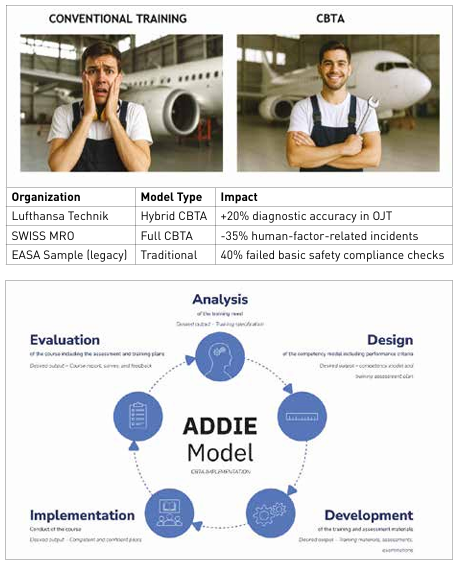
For example, a maintenance technician working in line maintenance not only performs maintenance tasks competently and safely to deliver the aircraft to the line in proper condition and on schedule, but also interacts appropriately with other components of the airline system, thereby contributing to the overall operational efficiency. In this regard, the human factor is at the very center of safety within the system and represents its most valuable element.
CONCLUSION
The understanding, approach, and culture of safety management both globally and in our country are evolving with time. The individuals who must adapt to these changing systems, sustain them, and ensure their continued improvement are human beings. The more swiftly and accurately humans adapt to these changes, the more effectively and correctly the system’s requirements will be implemented. This, in turn, results in a safe flight operation.
For this reason, every aviation organization must prioritize people first and invest in its human resources. Such investment includes continuous training, development of incentive systems, and the creation of appropriate working conditions.
The more an organization places the human being at its center, the more the human will place safety at the center in return.