ONE BOLT, ONE LIFE:
THE POWER OF HUMAN FACTORS
Aviation is among the industries where safety must be maintained at the highest possible level. Modern aircraft are complex engineering systems composed of thousands of components, each of which must operate in full compliance with the highest safety standards. In addition, ensuring safe and uninterrupted operations requires highly complex maintenance processes. However, maintaining aircraft safety does not depend solely on technological systems, but also on the people responsible for the maintenance, repair, and inspection of these systems.
Human factors play a critical role in aircraft maintenance. Maintenance technicians, engineers, and inspectors are essential to ensuring that aircraft meet operational requirements. Errors in aircraft maintenance not only create technical and operational risks, but also lead to serious economic losses. Engine failures, maintenance-related delays, and flight cancellations can cost airlines millions of dollars. This raises an important question: How can human errors in maintenance processes be reduced and safety increased? In an era of rapid technological development, how can traditional maintenance practices be integrated with advanced technologies?
This article examines the role of human factors in aviation maintenance, the most common types of errors, methods used to manage these errors, and how emerging technologies are being integrated into maintenance processes.
The Importance of Human Factors in Aircraft Maintenance
Human factors in aircraft maintenance examine how technicians are affected by physical, psychological, and environmental conditions and how these factors influence job performance. Maintenance operations often require technicians to work under time pressure while performing highly detailed tasks on complex systems.
According to the Federal Aviation Administration (FAA), human error in aircraft maintenance directly contributes to approximately 15% of aviation accidents. Studies conducted by the International Civil Aviation Organization (ICAO) show that a significant proportion of maintenance errors are directly related to stress and time pressure in the working environment. The need to complete tasks within strict time constraints can cause technicians to overlook procedures.
For example, in a Boeing study analyzing 122 maintenance errors, the following four main categories were identified:
1. Omissions
Failure to perform or complete a required maintenance step.
Example: Incomplete steps in a test card resulting in unreliable outcomes or leaving critical inspection areas unchecked.
2. Improper Installations
Incorrect or incomplete installation of components.
Example: Failure to install a washer during a modification, causing the remaining part to protrude and damage surrounding components.
3. Wrong Parts
Installation of incorrect or incompatible components.
Example: Installing a part not approved for a specific aircraft model.
4. Other Factors
Incorrect documentation, procedural errors, and communication failures.
Example: Inadequate information transfer during shift changes.
Another study categorized maintenance errors based on technician knowledge and skill levels:
Skill-based errors (48%)
Routine tasks performed automatically leading to incorrect actions.
Example: A technician incorrectly assuming a different procedure is the same as a familiar one.
Rule-based errors (28%)
Incorrect application of procedures or rules.
Example: Using an inappropriate tool when replacing a component.
Knowledge-based errors (24%)
Errors caused by insufficient training or experience.
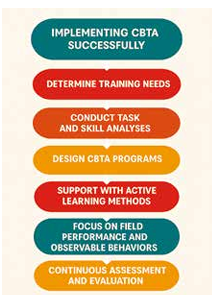
Example: A technician working on a new aircraft model without adequate training.
These classifications demonstrate that most maintenance errors stem from human factors and that the majority are preventable.Many of these errors result from poor working conditions, shift changes, fatigue, and communication breakdowns. In addition, James Reason’s “Swiss Cheese Model” shows that accidents usually occur when multiple small failures align, passing through gaps in multiple layers of defense.
Human-Factor-Related Accidents and Their Economic Impact
Some of the most catastrophic accidents in aviation history have been caused by human errors in maintenance:
American Airlines DC-10 Crash (1979)
On May 25, 1979, a DC-10 lost its left engine and pylon during takeoff from Chicago O’Hare. Maintenance crews had removed the engine and pylon together instead of separately to save time, causing microcracks in the mounting points. The aircraft became uncontrollable, killing 273 people.
Japan Airlines Flight 123 (1985)
A Boeing 747 crashed into a mountain after a structural failure caused by an improper repair seven years earlier. The incorrect repair led to metal fatigue and cabin pressure failure, killing 520 people.
Southwest Airlines Flight 1380 (2018)
A Boeing 737 experienced engine failure due to metal fatigue. A shattered window caused a passenger fatality. The failure was linked to undetected fatigue cracks and delayed component replacement.
According to Boeing’s cost analysis, maintenance-related engine failures cost airlines an average of $500,000 per incident, while maintenance-related delays cost approximately $10,000 per hour.
Methods for Preventing and Managing Errors in Aviation Maintenance
1. Reactive Error Management
Focuses on analyzing accidents and incidents to prevent recurrence.
Accident investigation boards
Error reporting systems
Internal audits and reviews
2. Proactive Error Management
Focuses on identifying risks before incidents occur.
Risk assessment and management
Training and awareness programs
Communication and teamwork enhancement
3. Maintenance Resource Management (MRM)
Improves communication, leadership, situational awareness, decision-making, and fatigue management.
4. Human Factors Analysis and Classification System (HFACS)
Analyzes errors at four levels:
Organizational culture
Supervision and management
Environmental and situational factors
Individual errors
5. Technological Support and Automation
Digital maintenance manuals & checklists
AR/VR-based training (Airbus, Boeing, HoloLens)
AI-based predictive maintenance (Rolls-Royce, GE, Pratt & Whitney)
Robotic inspection systems (Airbus drones, Invert Robotics)
Blockchain-based maintenance records (Honeywell: 40% error reduction)
Conclusion
Digitalization, artificial intelligence, augmented reality, and automation are among the most powerful tools for reducing human-factor-related errors. In the coming years, predictive maintenance, robotic inspections, and blockchain-based records will become standard, significantly improving safety and efficiency.
References
Hobbs, A. (2008). An Overview of Human Factors in Aviation Maintenance (AR-2008-055).
ICAO. Human Factors in Aircraft Maintenance and Inspection (Circular 253-AN/151).
NTSB. Aircraft Accident Report: Continental Express Flight 2574 (1992).
Boeing & ATA (1995). Industry Maintenance Event Review Team.
Olaganathan, R. (2024). Human factors in aviation maintenance…