BALANCING PRODUCTIVITY AND SAFETY IN MRO’S:
STRATEGIC APPROACHES FOR SUSTAINABLE SUCCESS
The aviation industry is under increasing pressure to perform maintenance, repair, and overhaul (MRO) services more efficiently and safely in the face of rapidly evolving technology and rising passenger demand. This article examines how productivity and safety are balanced in aviation maintenance processes, how this relationship affects company performance, and how current industry approaches are improving these systems.
Despite ongoing global economic uncertainty, rising operational costs, and supply chain pressures, the aircraft MRO sector continues its stable growth. By 2025, the global MRO market is expected to exceed USD 120 billion. In this competitive environment, companies are no longer evaluated solely on their technical capabilities, but also on their efficiency, productivity, and maintenance safety performance.
MROs in Changing Market Dynamics
Despite global economic fluctuations and increasing cost pressures, the MRO industry continues to expand. By 2025, the market is projected to reach USD 120 billion. However, growth alone is not enough—MRO organizations are now measured by multi-dimensional performance indicators such as:
Productivity
On-time delivery
Human-error rates
Safety performance
In such a highly competitive environment, technical competence alone is insufficient. Organizations that place continuous improvement at the center of their strategy gain a significant competitive advantage.
The Strategic Importance of Productivity and Efficiency
The success of MRO organizations is directly linked to how efficiently and productively they use their resources (workforce, equipment, time, and capital). Commonly adopted methodologies include:
Lean Maintenance
Six Sigma
Theory of Constraints (TOC)
Critical Chain Project Management (CCPM)
Creative thinking and continuous improvement techniques
All of these approaches aim to shorten maintenance turnaround times, reduce costs, and enhance safety.
The Role of Safety and Human Factors
In aviation, safety is not merely a goal—it is a prerequisite for sustainability. Regulations such as EASA Part-145 and FAA Part-145 require the widespread adoption of safety culture within maintenance organizations.
While in the early years of aviation nearly 80% of accidents were technically related, today this ratio has reversed, and more than 80% of aviation accidents are attributed to human factors.
To analyze and manage human error in maintenance organizations, several structured systems are used:
MEDA (Maintenance Error Decision Aid): A Boeing-developed system for root cause analysis of maintenance errors.
HFACS-ME: A human factors classification framework for maintenance errors.
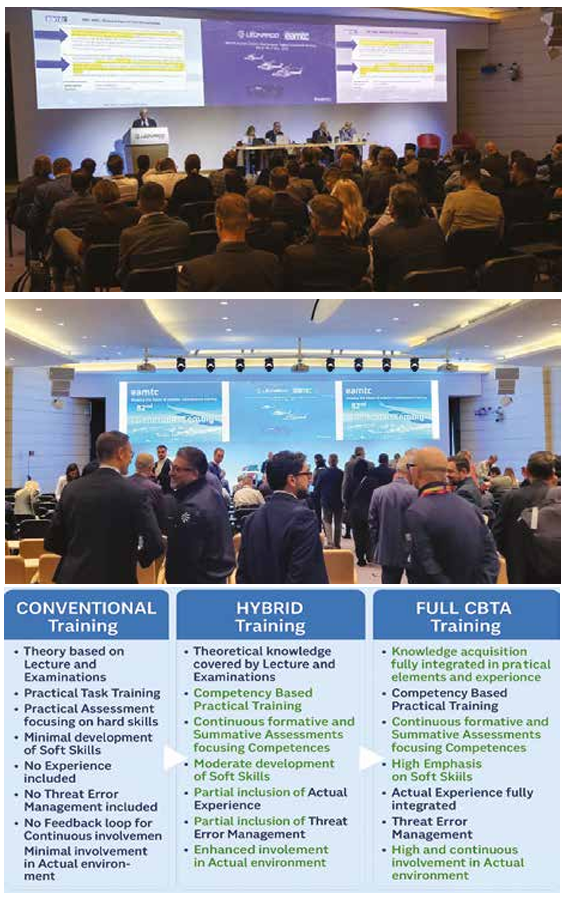
CBTA (Competency-Based Training and Assessment): A competency-based training model mandated by ICAO as of 2023.
Maintenance Errors: From Risk to Opportunity
Maintenance errors not only create financial loss but also damage organizational reputation. Recurrent errors lead to customer dissatisfaction, delays, and rework. To manage these risks, organizations typically follow a systematic process:
Error identification
MEDA investigation report
Error classification and contributing factor analysis
Definition of corrective and preventive actions
Common contributing factors include:
Inadequate training
Fatigue and shift scheduling issues
Poor coordination
Equipment and environmental limitations
Documentation and procedural deficiencies
These analyses are not only reactive but also serve as a proactive guide for preventing future errors.
Current Developments and Digital Transformation
Key technological trends in the MRO sector (2024–2025) include:
AI-supported maintenance planning systems
Autonomous drone-based visual inspections
Data-driven predictive maintenance
Sustainable MRO practices (emission monitoring and eco-friendly solutions)
Digital twin systems for component tracking
These innovations not only enhance operational performance but also support the development of a safer and more environmentally responsible aviation ecosystem.
Conclusion
In today’s competitive environment, MRO success depends not only on cost reduction or time savings, but on a holistic productivity–safety management approach:
Safety-focused productivity models must be adopted
Human factors must be managed through systems such as MEDA
Digital solutions should be integrated to support productivity
Continuous improvement must be combined with a culture of learning from errors
Productivity, sustainability, and safety are the three indispensable pillars of MRO organizations.
Wishing the industry continued progress toward a safer, more efficient, and sustainable future.