A321 NEO RADOME:
WHAT COULD THIS STRANGE STRUCTURE BE?
The Airbus A321neo EVO-5 radome enhances flight and maintenance safety through advanced S2-glass composites, titanium hardware, and external segmented lightning strips. Replacing toxic cadmium reduces health risks for technicians, while optimized composite curing and inspection-friendly design improve radar performance and impact resilience. EVO-5 combines engineering innovation, environmental responsibility, and human factors training, ensuring safer work environments, clearer weather-radar signals, and overall operational reliability.
U
nderstanding the EVO-5 Composite Radome and Its Impact on Maintenance Technician Safety and Flight Safety
When observing an aircraft from the ramp, few structures draw as much curiosity as the smooth, rounded nose of the Airbus A321 neo. To most, this dome-shaped section appears simply as an aerodynamic shell. Yet, the radome short for radar dome is an essential part of the aircraft’s safety ecosystem. It protects the weather-radar antenna, localiser antenna and glideslope antenna while ensuring minimal signal distortion, and it must simultaneously withstand aerodynamic, environmental, and electromagnetic stresses.
In 2025, Airbus introduced the EVO-5 radome, the latest generation in its single-aisle aircraft family. This new design combines advanced S2-glass composites, titanium hardware, external segmented lightning strips, and refined manufacturing processes to improve both flight safety and maintenance safety. The EVO-5 program also reflects a broader evolution in the aviation maintenance ecosystem linking human health protection, environmental sustainability, and operational reliability. 
This paper examines the EVO-5 radome through the lenses of engineering innovation, technician safety, and flight operations, incorporating the latest data from Airbus (2025), the Airbus SafetyFirst series (2024–2025), Engineering Pilot (2024), and academic studies on cadmium toxicity (Öktüren Asri et al., 2007). The goal is to illustrate how structural design, material science, and safety culture together determine the reliability of both the machine and the human maintaining it.
Evolution of Airbus Radome Technology
Since the first Airbus A300 in the 1970s, the manufacturer has continually improved its radome designs to meet the increasing demands of high-frequency radar systems and all-weather operations.
Early radomes consisted of glass-fiber composite shells light, inexpensive, but limited in strength and dielectric stability. The 1980s introduced Kevlar composites, offering higher impact resistance but prone to moisture absorption. Later, quartz-fiber radomes improved radio-frequency (RF) transparency but were heavier and more expensive.
By the early 2000s, Airbus standardized the S2-glass composite system an optimized balance between mechanical strength and dielectric uniformity. The EVO-3 and EVO-4 models implemented refined lay-up techniques and better lightning-protection meshes. 
In 2025, Airbus released the EVO-5 radome (Modification 172848, P/N E531-32310-000), which marks the most comprehensive redesign in decades. Its innovations respond to two main drivers:
Enhancing flight-safety performance under lightning and hail events;
Improving maintenance safety by eliminating toxic metals and simplifying inspection tasks.
According to the A320 Family Radome Information manual (Airbus, 2025), EVO-5 introduces several key advancements:
Titanium Lightning Studs
Previous generations used cadmium-plated studs to connect the radome’s lightning diverter strips to the aircraft structure. Although cadmium offered corrosion resistance, it posed serious toxicity risks for maintenance personnel. EVO-5 replaces these with titanium studs, which are corrosion-resistant, lightweight, and non-toxic. This change eliminates cadmium dust exposure during removal, sanding, or bonding operations.
External Segmented Lightning Strip
Unlike fully internal designs, the EVO-5 incorporates a 25-centimeter external segmented lightning strip, visible on the nose surface. When lightning strikes, this strip creates an ionized, low-resistance path that channels the electrical discharge into the broader aircraft protection network. The visible segmentation also allows quicker inspection and ensures predictable conductivity. 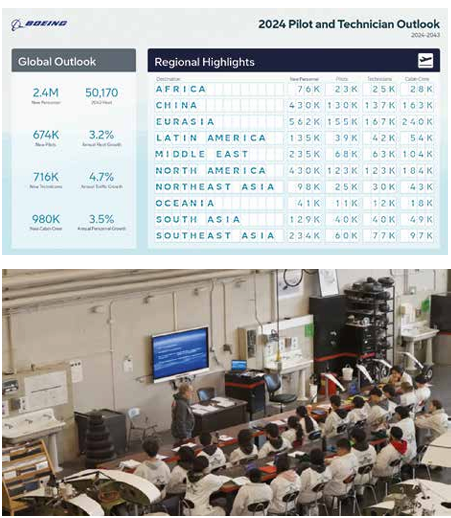
Optimized Composite Curing and Sealing
The EVO-5 is cured at 2 bar autoclave pressure (compared to 1.2 bar in EVO-4), producing tighter resin matrices and improved cohesion. Revised seal designs and metallic spacers reduce the risk of water ingress one of the main causes of radar-signal attenuation and internal corrosion.
These refinements support compliance with RTCA DO-213A standards for radome RF transparency and structural performance.
As highlighted by Engineering Pilot (2024) in “The Radome: More than an Aerodynamic Housing”, a radome must reconcile three conflicting requirements: aerodynamic smoothness, RF transparency, and structural toughness. Each parameter directly affects radar system reliability. 
Even a thin layer of paint, trapped moisture, or micro-delamination can alter the dielectric constant of the composite, leading to signal distortion or false echoes. Over-thick paint layers can also absorb or reflect radar energy. EVO-5 addresses these challenges through precise composite lay-up control, uniform wall thickness, and improved surface finishing.
The Engineering Pilot analysis further notes that damage from bird impacts, hail, or ground-handling may remain invisible on the surface yet cause internal honeycomb collapse or bond failure. Therefore, advanced non-destructive inspection (NDI) methods ultrasonic pulse testing, thermography, or tap-tests must complement visual inspection. EVO-5’s internal honeycomb core is optimized for such assessments, providing clearer acoustic signatures for damage detection.
Aircraft maintenance technicians are at the frontline of aviation safety, yet they are also exposed to various occupational hazards. One of the most insidious is chronic exposure to heavy metals like cadmium, historically used in anti-corrosion coatings and electrical bonding components.
Research by Öktüren Asri, Sönmez, and Ç›tak (2007) at Akdeniz University established that cadmium:
Is a Group 1 carcinogen (IARC classification);
Accumulates in the liver, kidneys, and bones, with a biological half-life of 10–38 years;
Causes osteoporosis, respiratory damage, and renal failure upon long-term exposure;
Is absorbed through inhalation of dust and fumes, particularly during grinding or soldering processes.
In MRO environments, technicians may inadvertently inhale cadmium particulates when repairing or stripping legacy radomes.
By replacing these components with titanium, EVO-5 significantly reduces this health risk.
Nonetheless, composite workshops remain environments of potential chemical exposure resin vapors, fiber dust, and adhesive solvents require strict personal protective equipment (PPE): respirators, nitrile gloves, and local exhaust ventilation. Organizations must enforce EASA Part-145 and OSHA compliance to monitor airborne contaminants and protect technicians’ health.
From an operational viewpoint, the EVO-5 radome is integral to the aircraft’s weather-radar system performance. It acts as the first interface between the environment and the antenna, and any loss of transparency can compromise pilot decision-making in convective weather.
The external segmented strip on EVO-5 ensures lightning energy is distributed uniformly, preventing localized thermal damage and delamination. Its titanium hardware reduces galvanic corrosion and maintains grounding reliability over the aircraft’s service life. Together, these features contribute to a more stable maintenance cycle and fewer unscheduled repairs.
Airbus data show that radome-related weather radar faults have decreased by over 30 % in EVO-5 installations compared with EVO-3 variants (Airbus, 2025). Fewer faults translate into better operational availability and reduced human-factor risks associated with repetitive troubleshooting and rework.
Radome Integrity and Weather Radar Performance
Airbus SafetyFirst’s article “Optimum Use of Weather Radar” (2024) emphasizes that radar performance depends not only on the equipment itself but also on the integrity of the radome through which electromagnetic waves must pass.
A radome with surface imperfections or moisture trapped in its composite layers can cause beam scattering and signal attenuation, leading to underestimation of storm intensity or false echoes. The EVO-5 design minimizes these risks through uniform thickness, precision curing, and hydrophobic sealants. 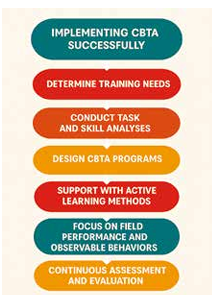
For technicians, this means that every painting, cleaning, and inspection task is a safety-critical operation. Excess paint thickness or improper sealant selection can alter the radome’s RF response. Thus, maintenance crews must adhere strictly to manufacturer specifications in the SRM and AMM to preserve weather-radar precision.
Ultimately, the EVO-5’s contribution to flight safety lies in its ability to allow modern radars to “see clearly” through the storms an advantage that depends on both sound engineering and skilled maintenance.
Bird and Hail Strike Resilience
The Airbus SafetyFirst document “Bird or Hail Strikes on the Radome” (2025) details the unique vulnerability of forward structures to impact events. Even minor surface marks can mask severe internal delamination within the honeycomb core.
The recommended post-event procedure includes both external and internal inspections using non-destructive techniques. Technicians must pay special attention to lightning diverter strips, stud integrity, and paint layers. Failure to detect hidden damage may lead to radar signal distortion or even structural failure under pressure loads.
EVO-5’s improved seal design and titanium studs enhance impact resistance and simplify inspection. Moreover, proper containment and PPE are essential when handling debris, since broken composite fibers or resin dust can irritate the respiratory system and skin.
For flight crews, the importance is equally clear: a compromised radome can reduce the range and accuracy of the weather radar, potentially delaying storm avoidance maneuvers. Hence, regular training and prompt communication between pilots and maintenance teams after hail encounters are vital to overall safety continuity.
Environmental and Regulatory Dimensions
Aviation maintenance safety now extends beyond individual health to environmental responsibility. Cadmium waste disposal and composite dust management are regulated under European REACH and EASA Part-145 Annex II standards.
Cadmium can remain in soil and water for hundreds of years, bio-accumulating through plants and entering the food chain (Öktüren Asri et al., 2007). Replacing cadmium in EVO-5 hardware directly reduces the aircraft’s ecological footprint. Technicians must treat cadmium-containing legacy components as hazardous waste, store them in sealed containers, and use certified disposal channels.
This environmental aspect aligns with Airbus’s broader sustainability agenda, which emphasizes “Design for Environment (DfE)” principles engineering choices that protect both people and planet throughout the product life cycle.
Training, Human Factors, and Safety Culture
Engineering advances achieve little without human discipline. The transition to EVO-5 radomes requires continuous learning in three key domains:
Composite Repair Competence – Technicians must master modern bonding, patching, and painting techniques specific to S2-glass materials. Training should include hands-on modules and OEM certification.
Human Factors (HF) – Fatigue, communication, and organizational pressures remain leading contributors to maintenance errors. Integrating HF training with EVO-5 maintenance curricula strengthens situational awareness and risk recognition.
Safety Management System (SMS) – Proactive hazard reporting and data-driven safety metrics enable organizations to detect patterns of exposure or defects before they lead to incidents.
By combining technical and behavioral competence, the aviation maintenance community ensures that new materials and designs translate into real-world safety benefits.
Conclusion
The EVO-5 radome of the Airbus A321 neo embodies a comprehensive approach to aviation safety one that recognizes the inseparable link between technological innovation and human well-being.
By replacing cadmium with titanium, introducing segmented lightning strips, and optimizing composite manufacture, Airbus has reduced maintenance hazards while improving operational performance. Each design decision addresses a specific dimension of safety: physical, chemical, and procedural. 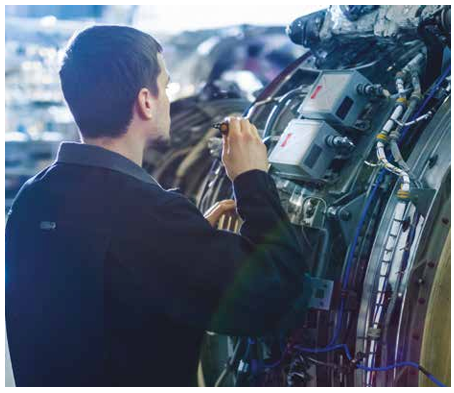
For maintenance technicians, EVO-5 symbolizes a safer and cleaner work environment. For flight crews, it ensures clearer radar vision and greater confidence in adverse weather. And for the industry as a whole, it illustrates that the future of airworthiness depends on integrating engineering excellence with sustainability and human factors.
Flight sSafety begins with technician safety and technician safety begins with awareness.
Through continuous education, precise workmanship, and respect for materials, the aviation community ensures that innovations like EVO-5 fulfill their ultimate purpose: protecting both lives and missions.
References
Airbus SAS. (2025). A320 Family – Radome Information: Standards / Interchangeability & Event Procedures (Issue 53.15.00024). Toulouse: Airbus Engineering Support Division.
Airbus SAS. (2025). Bird or Hail Strikes on the European Union Aviation Safety Agency (EASA). (2023). Part-145 Maintenance Organization Requirements. Cologne: EASA.
Öktüren Asri, F., Sönmez, fi., & Ç›tak, S. (2007). Kadmiyumun çevre ve insan sa€l›€› üzerine etkileri. Akdeniz Üniversitesi Ziraat Fakültesi Dergisi, 16(1), 87–96.
World Health Organization (WHO). (2021). Cadmium: Health Effects and Exposure Pathways. Geneva: WHO.